Why I Don’t Train Barefoot

Barefoot training and the use of minimalist footwear has become a widely discussed topic in sports physical therapy and the running community. Many folks in the fields of sports medicine, injury rehabilitation, and performance training are all-in on the idea of training in bare feet.

Training barefoot provides great benefits.

The absence of shoes gives the body a direct connection to the ground for quicker and more accurate feedback which helps to improve balance.

Barefoot training also strengthens the feet themselves. When the feet do not have assistance from footwear for support, they must do the entirety of that job for themselves. Muscles, tendons, and ligaments in the feet work to support the arch, the heel, and the forefoot which strengthens them over time. For this reason we often prescribe barefoot training for our physical therapy patients.

However barefoot training is not appropriate for all people.

Most of us walk on hard surfaces like concrete and unlike grass or dirt, concrete is not a forgiving surface. We are unable to manipulate concrete and we have less shock absorption as we step onto harder surfaces.

In addition to an external environment that may not be conducive for barefoot training, many people have unique foot structures or previous injuries that make barefoot training unrealistic. In these situations, a shoe may help their foot function better.

An appropriate shoe allows for the foot to find the ground optimally and properly transition through the different phases of the gait cycle. This allows the body to properly alternate from one leg to the other.

A proper shoe must provide optimal heel control, allow for the arch of the foot to contact the shoe properly (and at the correct time in the gait cycle) and bend only where the toes bend.

The correct shoe can have an incredibly powerful effect on a variety of different ailments and can make a huge difference in the effectiveness of someone’s rehabilitation and training program.

Are you eager to find out if barefoot training is right for you? Contact us today to learn more!
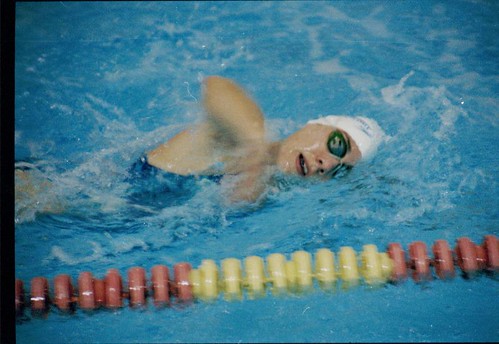
Swimmers-Why Training on Land Improves Performance in the Water

Dryland training… It’s a love-hate relationship for every swimmer. Believe it or not, building strength and power on land is just as crucial to improving race performance as logging yardage in the pool. Shoulder pain and overuse is the most common complaint for swimmers (and is the most common sports physical therapy injury we see in swimmers), often impacting their ability to continue to train at a high level. How can we train the shoulders on land before returning to the water? 

Shoulder Strength and Resilience 

It’s important for swimmers to have adequate strength and range of motion in the shoulders to tolerate the repetitive load of a 2 hour swim practice. The rotator cuff plays a major role in stabilizing the shoulder during overhead movements and producing power through the pull-down. Lift off drills such as this target rotator cuff muscle activation and tolerance at an end range of motion. Once you’ve mastered the previous drill, overhead pressing variations like this and kettlebell stabilizing drills such as this will encourage you to recruit the larger muscles of your trunk and core to create resiliency overhead. 

Full Body Power 

However, swimming is a full body workout! It’s important to incorporate elements of full body power into your workout to prevent injuries when you’re racing or training at high speeds. Overhead medicine ball passes are a great functional exercise to challenge your overhead strength and full body stabilization in a dynamic environment. Progress this to a full medicine ball slam to further mimic the pull-through portion of your stroke, no water needed! 

Photo Credit

swimmer” by Pierce Presley is licensed under CC BY-NC-SA 2.0.

What Does It Mean To Be “Out of Alignment?”

“My body feel out of alignment.”

“My <insert healthcare professional here> said that my hips are off.”

“I think I just need to be adjusted.”

These are examples of a few of the comments that patients may express in physical therapy or other injury rehabilitations settings.

The belief that we are like a vehicle that needs to be re-aligned is often the fault of the healthcare industry, including physical therapy.

In the past, healthcare providers would tell their patients that a part of their body is out of alignment and needs to be adjusted to put it back in place. They explain that this is the reason for any discomfort that may be present.

Thankfully, this is no longer taught by most healthcare providers as this thought process has been disproven.

Our bodies are incredibly resilient.

Our joints do not simply fall out of alignment. In fact, our bodies are designed to move and if we were constantly “in line”, it would be impossible to move anywhere!

So, what is happening when an area of our body feels “off”?

As we perform a movement repetitively, compensations and movement limitations become more noticeable.

One area of the body may be moving excessively, while another area of the body may be moving too little.  For example, if your ankle mobility is limited during a squat, you will move excessively at the hips to pick up the slack, causing more stress in that area. As a result, pain, or the feeling of being out of alignment may occur in the hips/pelvis.

If you feel “off” or have been told that you are out of alignment, the solution is likely to begin with discovering what movement limitations may have led to this feeling in the first place. This information can then be used to teach you strategies to move and feel better!

Are you interested in discovering what solutions may be right for you? Contact us to find out more about our physical therapy services!

Try this to improve your hip and trunk mobility

Who doesn’t want to loosen up their hips and trunk while building strong hamstrings and glutes?!

It is common to encounter youth athletes and active adults in athletic physical therapy and injury rehabilitation settings who have tight posterior hips and stiff rib cages. This limits the amount of rotation that they available through the trunk and reduces mobility in a variety of different directions within the hips.

As a result, more stress is placed onto the lower back, knees, and other areas of the body. Overuse injuries often follow that send people to physical therapy, including general lower back pain, lumbar disc injuries, knee arthritis, meniscus injuries, etc.

The good news is that the root causes of these kinds of injuries can be addressed and often do not require a boring home exercise program.

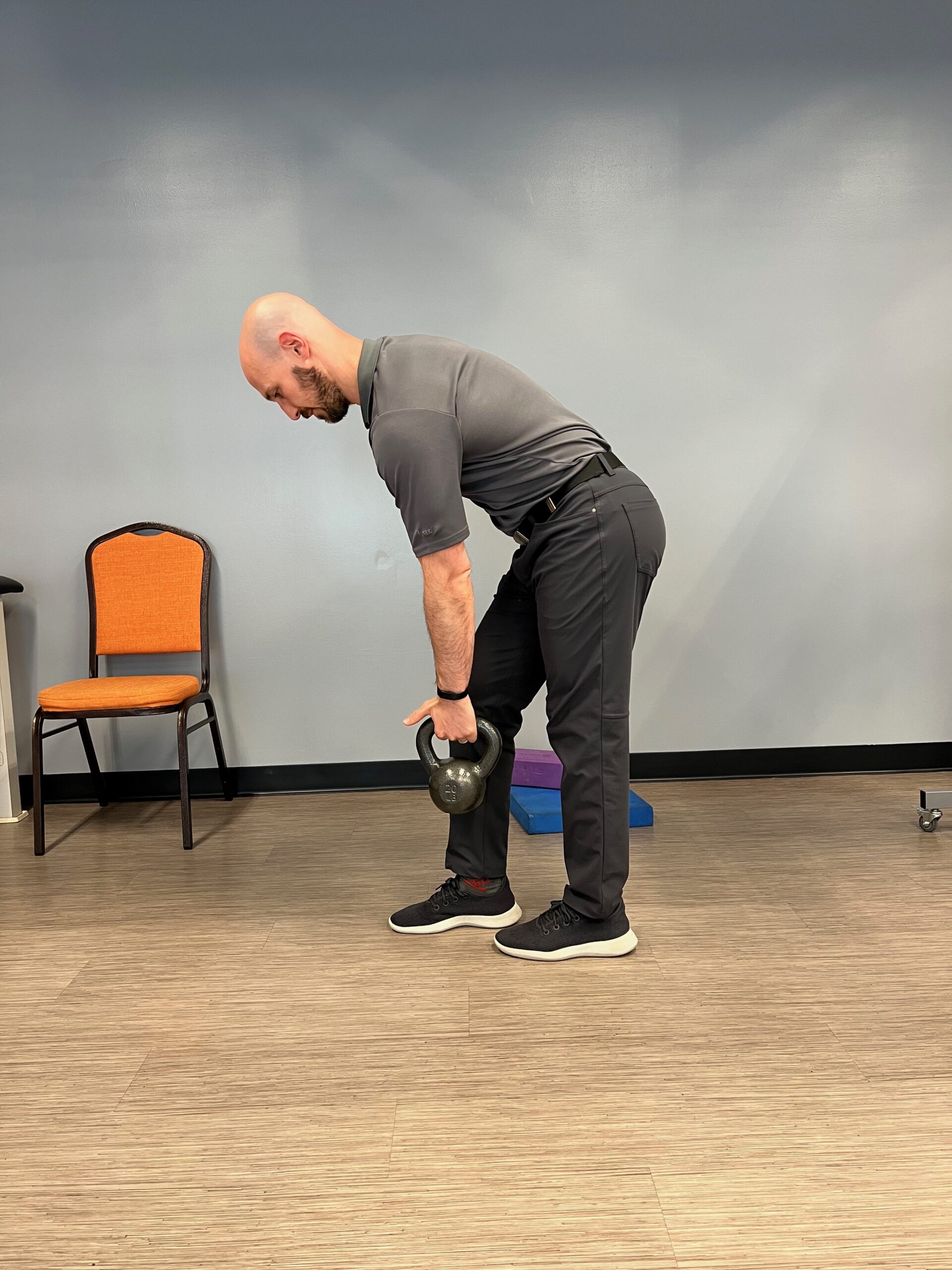
The Single Leg RDL (Romanian Deadlift) is a fantastic drill that you can implement into your workout routine to improve your hip/trunk mobility and strengthen your glutes/hamstrings.

This drill is particularly powerful for rotational athletes like golfers, tennis players, lacrosse players, and hockey players.

We typically start our patients and training clients with the kickstand version of the Single Leg RDL before progressing to the more advanced versions below.

Kickstand RDL (front leg emphasis)

Kickstand RDL with Foot on Wall

The key with these activities is to ensure that you feel the back of your hip, glute, and hamstring working (on the working leg), while also feeling your abs working. You should not be feeling your lower back at any point during the drill.

Are you interested in learning more ways that you can adjust your exercise program to correct old injuries, improve your performance and/or stay pain free? If so, simply contact us!

Do I Need Surgery?

This is a very common question in physical therapy and injury rehabilitation settings .

As humans we think of ourselves as machines. Something is broken and needs to be fixed.

However, we are not machines, and surgeons are not mechanics that fix something broken. In fact, they are closer to janitors “cleaning up” accumulated damage that was created by something else.

A recent literature review published in the prestigious journal, JOSPT, found no evidence to support having surgery versus non-surgical interventions and 9 different areas of the body were researched! The study can be found here.

Now before we jump to conclusions, surgery is an essential part of healthcare.

It is the best option after trauma occurs that causes structural damage which will prevent the body from functioning as required for sport or daily life. Examples include broken bones that are displaced, as well as tendon or ligament ruptures like ACL or Achilles tears.

Surgery may also be a solution to chronic pain or injury that has not improved with non-surgical interventions such as physical therapy.

In the instances described above surgery is utilized as a last resort or because of significant, clear structural damage which can be reliably repaired.

Research, such as the article referenced previously, commonly shows poor long-term outcomes for surgery because we are commonly led to believe that surgery “fixes” the issue.

Surgery does not address the root causes of an injury and it is essential to learn is what caused the damage requiring surgery in the first place. As a result, we can address the root causes of pain, injury, or tissue damage before surgery, hopefully avoiding it altogether. If surgery is still warranted, then the factors that lead to it must be addressed in the post-operative process. If not, we will continue to see more studies like the one referenced in this article showing poor outcomes from surgery.

As the saying goes, if we don’t learn from history, we are bound to repeat it!

Is Shoulder Clicking Dangerous? Can Sports Physical Therapy Help Fix It?

Do you ever experience rice crispys in your shoulder (snap, crackle, pop) when lifting your arm overhead or exercising? Ever wonder if this is something to be concerned about or if sports physical therapy can help to fix it?

There are many reasons that this may occur. The shoulder is a complex joint with the largest range of motion in the body. It is comprised of bone, ligaments, cartilage, and tendons that allow for ease of movement in many different directions.

Because the shoulder is the most mobile joint in the body, it has many ways that it can compensate, and become unstable when compensations are repeated over time.This is one reason (among many) why the shoulder often becomes injured.

However, before you assume the worst, ask yourself the following:

1) Is the popping I feel painful?
2) Have I experienced a recent shoulder injury?
3) Does my shoulder feel stable during activity?
4) Is it accompanied by any weakness?

Clicking and popping can occur for many reasons. If it is painless, it may be harmless joint noises known as crepitus, which is simply pressure being releasing from the joint.

On the other hand, clicking and popping may occur simultaneously with pain. If that is the case or you answered yes to any of questions 2-4 above, it is time for your shoulder to be assessed by a healthcare provider, such as a physical therapist or physician.

The most important thing to learn from your healthcare provider is the root cause of your symptoms. This information enables you to correct them once and for all!

If you are experiencing annoying clicking/popping in your shoulder, and you are ready to determine its root cause, contact us today!

×