How to Improve Your Mobility

Do your hips or lower back feel tight as you perform movements like a squat? Perhaps your shoulders feel stiff when trying to bring your arms overhead, or your ankles feel restricted. All of these are common reports in sports physical therapy field.

Regardless of where your mobility problems lie, it is your body, more specifically your nervous system that is intentionally causing this. The stiff muscle that you feel is the body protecting itself or adapting to the demands placed upon it.

I often think back to my previous experiences as a physical therapist and the players that I worked with in the National Basketball Association (NBA). Most of them had ankle mobility restrictions, which were an adaptation to constantly being on the balls of the feet. These athletes were constantly sprinting, jumping, and cutting with their heels rarely touching the ground.

As a result, their body adapted to make them better at these movements. The tissues around their ankles turned into tight springs that allowed them to remain explosive without expending too much energy.

Adaptations like this are beneficial for performance however occur at the expense of mobility. As these adaptations go too far the risk of injury increases.

How do we know that adaptations have gone too far?

When the body no longer has the prerequisite abilities necessary to perform the activities required of it. In this case the joints of the body have less mobility than life or their activities require. As a result, uncomfortable feelings of stiffness or injury occur.

For this reason, I encourage athletes and patients to perform daily exercises that practice movements outside of their preferred movement strategies. This way the body cannot excessively adapt to only one way of doing things.

Here is a drill that I recently gave to a patient with shoulder mobility limitations and this is a drill that I advised a runner perform within her daily routine.

Would you like to discover the daily essentials that will help you feel better and move better? If so, contact us today!
When You Should Be Using a Workout Machine

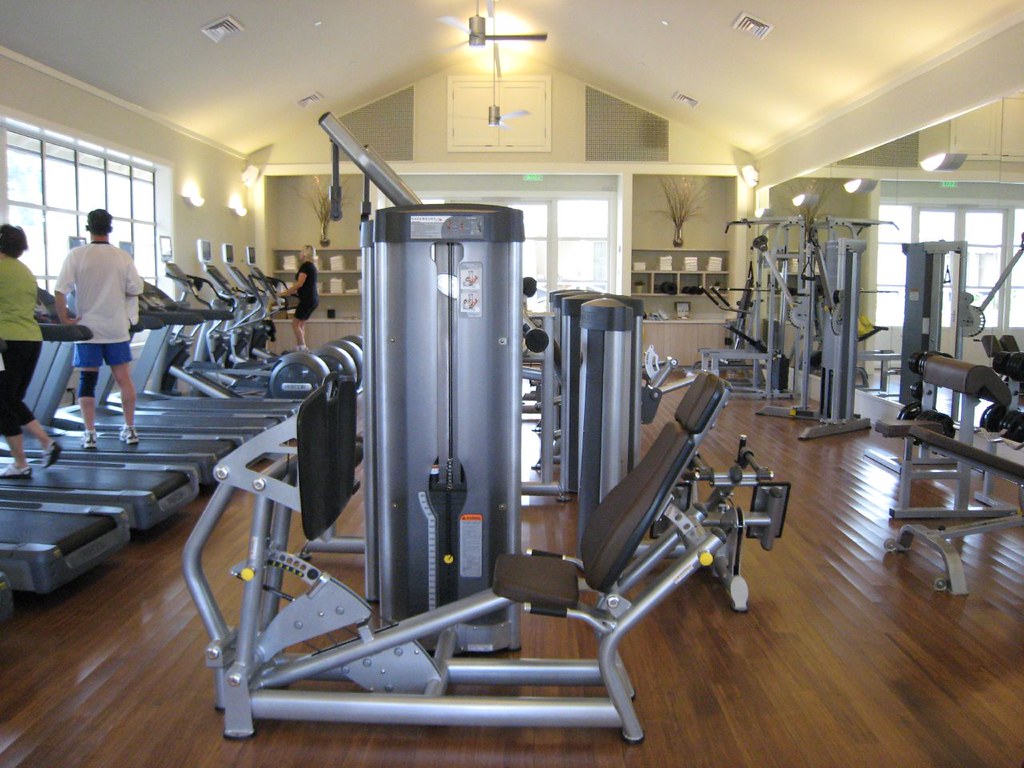
Workout machines like the prone hamstring curl are underutilized in the sports performance setting and often get a bad rap in the sports physical therapy industry. I have heard people (physical therapists, strength coaches, running coaches, personal trainers, etc.) say negative things about using machines for a variety of different reasons.

“Machines are not functional. Humans should provide their own stability and not rely on a machine to do it for them.”

“X, Y, or Z machine isolates only one area of the body and we do not move 1 area at a time in real life.”

The support that machines provide, allowing people to focus on working one area has many advantages when used appropriately.

Even athletes can benefit from using machines.

High level sprinting requires an athlete to have a great deal of hamstring strength as the muscle is in a shortened position (when the knee is fully bent).

During the recovery phase of sprinting (as the leg is being brought back to the front of the body) the heel should be as close to the athlete’s bottom as possible. As this motion begins, the hip is a relatively extended position.

The prone hamstring curl trains end range hamstring strength when the hip is in this position. Dr. Cohen even pauses briefly in this video when at the end of the movement to stress this position.

During this exercise, the machine will dictate the movement however remember to use your abs to prevent the lower back from extending during any portion of the exercise.

There is no such thing as a good or bad exercise. Almost every exercise is appropriate when used properly. The key is to be clear on the desired outcome of the drill and how to implement it most effectively into your training routine.

Would you like to learn how to design your training most effectively to best accomplish your goals? If so, contact us to receive a customized training program designed specifically for you!

Speed Up Your Recovery From Back Pain

As anyone who has thrown their back out and needed physical therapy will tell you, bending over feels rough for several days after.

Putting on socks and even sitting down is uncomfortable as the body attempts to prevent the lower back from moving, especially into flexion.

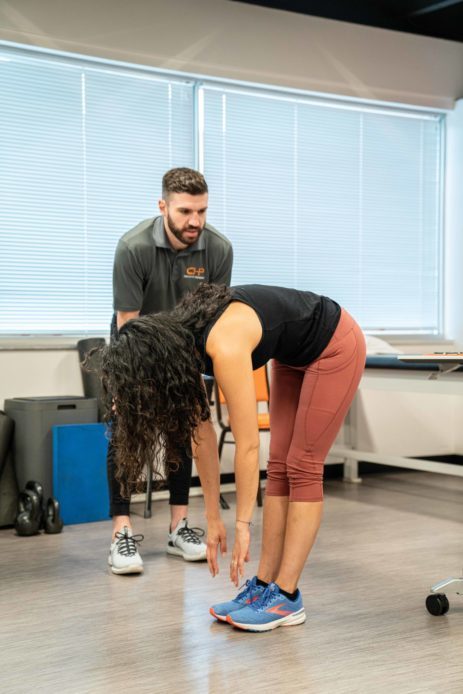
Flexion of the spine is commonly the most aggravating movement for anyone experiencing an acute episode of back pain. In physical therapy we test this by asking our patients to touch their toes. Once the acute episode subsides, the next step is training and learning to tolerate slow, controlled movements of the spine.

When tolerated well, the reverse crunch is great drill to teach this quality and can be used effectively as a warmup in the gym.

Oftentimes this is where the injury rehabilitation process stops. At this point the body can tolerate all normal daily activities however it has not learned to manage rapid movements of the spine, such as those that occur in sport or in the gym.

The Med Ball slam is a great drill to train the spine to tolerate movements that involve rapid spinal flexion. This drill should be pain free before attempting any heavy Olympic lifts like a clean or a snatch.

Also, remember to avoid using a ball that bounces as we don’t want any broken noses from this drill!

Physical Therapy Didn’t Work…

I tried physical therapy and it didn’t work.

Many of our patients in Bethesda have seen other physical therapists prior to seeing us. In their previous physical therapy experiences, they did not achieve the results that they were looking for and are coming to us for answers.

Personally, I love working with these people because they continue to believe that our profession can help them. However, negative experiences in physical therapy often cause many others to lose faith in the profession.

Perhaps you are one of these people. If so, I don’t blame you as I once was in your shoes!

When I was in High School, I experienced a quadricep injury that was impacting my ability to play football.

I went to my local physical therapy practice searching for help in overcoming this injury and play in my junior season. It was going to be my first season starting on both offense and defense causing this injury to constantly remain in the front of my mind.

My introduction to physical therapy was not what I had hoped for, and I now realize that my physical therapists were not taking great care of me (to learn more about how you can determine if this is the case, see my latest blog here).

Luckily, I was still able to play in my season and was back to 100% by the middle of the year. However, I can’t help but wonder if I would have been fully healthy to start the season if I saw a different physical therapist.

Like all other professions, the physical therapy industry has great professionals and poor ones. Furthermore, some physical therapists specialize with athletes, some with cardiac patients and others with people living in nursing homes.

As a result, my hope is that instead of saying “I tried physical therapy and it didn’t work”, you say “This physical therapist or physical therapy practice didn’t provide the results that I was looking for and I need to find someone that is a better fit for what I need.” 

Stretching May Not Be Helping

Many believe that sports physical therapy and even some of performance training should consist of a great deal of stretching.

However, every component of injury rehabilitation or training should have a definitive purpose. Have you ever stopped to ask yourself, what do I hope to gain from stretching this area and does this area need to be stretched?

As with most things, the answer is that it depends and begins by understanding why a muscle has become stiff in the first place.

Muscles become stiff when they are in a shortened position for long periods of time and wind up feeling stiff. Muscles remain in a shortened position when the body stays in one position for too long (such as staying sitting or standing all day at work) or when the body is stressed the same way repeatedly (ex. When we repetitively move in the same way without variety).

Adding some variety to the movements that you perform daily may be the solution to fixing “tight” muscles!

Stretching an area that feels stiff without correcting the reason that it became stiff in the first place will waste your time.

As a side note, a muscle may also become stiff to protect against an injury (very common with back pain) and stretching this area can increase the risk of experiencing an injury!

Next time you think of stretching a muscle, don’t forget to ask yourself why this muscle stiff in the first place!

The first drills that we teach to youth athletes

It is essential to understand the demands placed onto the body when working in a sports physical therapy, injury rehabilitation, and performance training setting.

Sports and weight training require athletes to control the body when moving rapidly.

If an athlete wishes to own the “stack” (stacking of our head, rib cage and pelvis over one another) and protect their lower back they must be capable of doing so when performing high velocity movements.

When youth athletes first train, we use medicine ball drills to teach this ability.

The medicine ball chest pass is a great drill to teach this capability. During this the drill, the athlete is generating enough velocity to propel the ball into the wall and back. As this occurs, it can be easy to lose the “stack” requiring the athlete demonstrate a higher of level of body control.

After mastering the chest pass, it is time to bring the arms overhead. More trunk strength and control are required with this movement and the ability to manage intra-abdominal pressure is further challenged. Check out this exercise here.

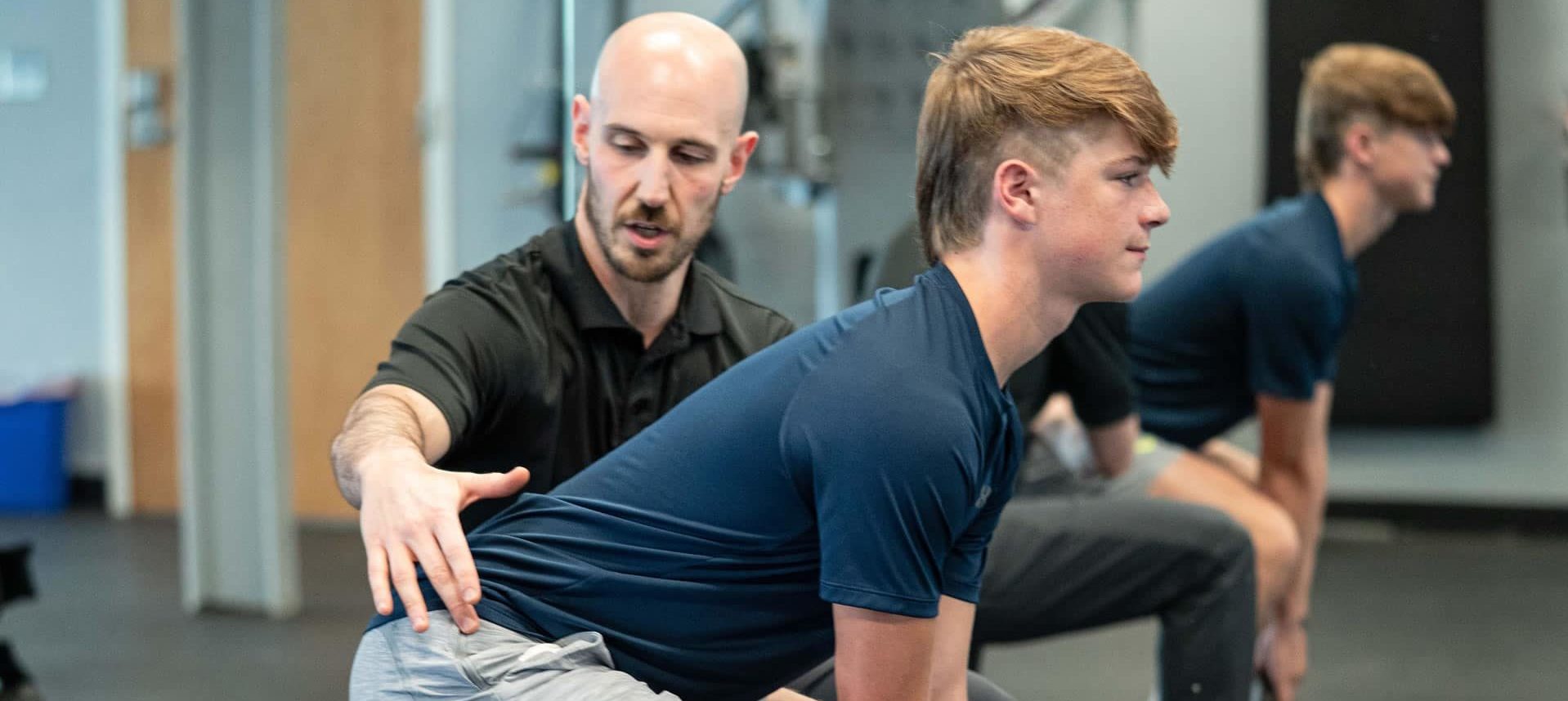
These are just a couple of the exercises that we incorporate into the training sessions and warmups for our youth athletes.

If you interested in learning more about the summer training options for youth athletes at CHP,  please contact us!

×