How to Know if an Exercise is Good or Bad

Athletic physical therapy often consists of answering questions about particular exercises.

What is your opinion on deadlifts? How do you feel about pushups? Is running bad for your knees?

My answers typically start by highlighting the context involved with any particular exercise.

Exercises are often labeled as good or bad, however most exercises are appropriate in a particular context, while being inappropriate in another.

For example, the deadlift is a great exercise when the goal is to build muscle and strength of the “pulling” musculature (glutes, hamstrings, upper back). However, this same exercise can be problematic for an individual with a history lower back pain, and cannot properly control his/her spine as the hips bend.

If a deadlift is inappropriate for a particular person, he/she can work on the qualities necessary to safely perform the movement, should that be a priority. Check out the video below as a reference for how Dr. Cody teaches the ability to brace the abs during a deadlift.

Bracing During a Deadlift

It is much simpler simply label the deadlift as “bad for your back” or “the best exercise for xyz”, however as with most things, the answer is not black and white.

Unfortunately, this way of thinking also applies to entire methods or schools of thought. Well-known strength coach Eric Cressey (and sadly the strength coach of the New York Yankees) wrote a great article about his process for assessing particular methodologies.

What do you think of XYZ method?

Keep an eye out for any professionals in the field of health, medicine, or fitness that label things as good or bad. Things are rarely that simple as a myriad of different factors exist within the presentation of every individual. If you experience a professional that claims he/she has the only guaranteed solution, and everyone else is wrong, run!

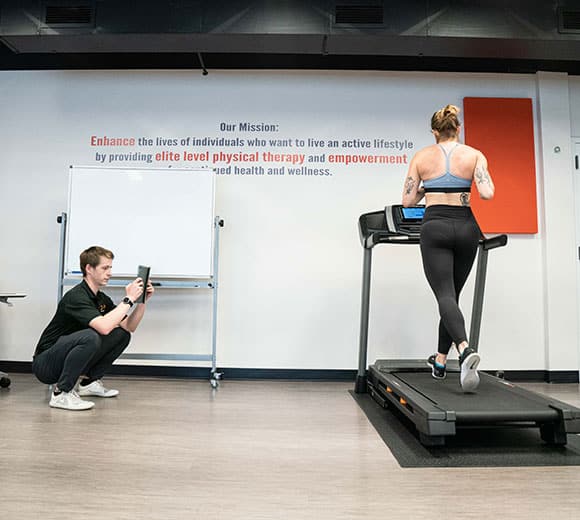
An Essential Part of Athletic Physical Therapy: Strength Training for Runners

Many of the runners that we work with at CHP supplement their running with strength training. Strength training is a large component of athletic physical therapy and provides a host of benefits including, but not limited to; reduced injury risk, increased muscular endurance, and faster running times. Research shows that regular strength training improves a runner’s speed and VO2 max. VO2 max is a measure of the maximal amount of oxygen that a person can use during exercise.

However, there is one important caveat to all of these great benefits. A runner’s strength training program must be designed and executed appropriately, and according to the runner’s goals and individual characteristics.

Luckily, most runners have similar goals. They wish to run faster and/or farther, and avoid injury.

Strength training programs for runners should consist of exercises that improve qualities specific to running.

When running, there is never a time when both feet are touching the ground simultaneously. The arms and legs are constantly moving in opposite and alternating directions as the body transitions from one foot to the other.

Therefore, we commonly advocate for runners to include more single leg exercises into their training.

These exercises include, but are not limited to: lunges, single leg squats, split squats, and single leg RDLs (Romanian deadlifts). Simply adding one of these activities into each of your strength training sessions can have a large impact. Take a look at the videos below for examples of these activities.

https://www.youtube.com/watch?v=aazACzyUR-Q

https://www.youtube.com/watch?v=KK05iugeIDE

https://www.youtube.com/watch?v=EjDtPek261c

Furthermore, runners should not neglect upper body training. Arm drive is an essential component of running and helps to drive leg action. An effective runner cannot have one without the other!

A thoughtful and more scientific approach to strength training, specifically designed for runners, may be all that is needed to drastically improve your running performance.

How Tom Brady Approaches Off-Season Training

Tom Brady is a marvel to the world of Sports Physical Therapy and performance training.

As you may know, Tom Brady is about to make his 10th trip to the Superbowl at the age of 43. The opposing Quarterback in this game will be Patrick Mahomes. Mahomes was in kindergarten when Brady played in his first Superbowl back in 2002!

Athletes like Brady approach their off-season training with very specific goals in mind. These include sport and position specific goals (ex. Improving footwork, accuracy, throwing mechanics), as well as goals related to health and fitness.

The greats across sports such as Brady, Lebron James in basketball, and Wayne Gretzky in hockey focus their off-season training on staying healthy throughout the upcoming season. They understand the classic saying that “the best ability is availability.”

They realize that attributes that make them more resilient to injury will also improve their performance on the field, court, or ice.

Brady requires a great deal of mobility to best absorb the hits that accumulate throughout a football season. An increase in mobility will also allow him to throw accurately from the variety of awkward positions that the body is contorted into throughout a game, thus improving his performance as well.

Lebron James possesses an incredible amount of single leg control and strength. This is necessary to propel his nearly 270-pound body into the air as he jumps off 1 leg. This control and strength are equally important to avoid injury as he lands and must quickly adapt to awkward situations (players falling under him or contact him in the air).

Much like Brady, Gretzky must also be capable of contorting his body into a variety of different positions to pass or shoot from varying angles, absorb contact, or maneuver around opponents. These abilities require lots of mobility and strength throughout a variety of different positions.

The actual off-season training for Brady, James, and Gretzky will look different for each. However, the bulk of their training likely will not include commonly performed gym-based exercises, such as deadlifts or bench press. These are fantastic exercises when performed in the right context, however do little to help with the performance of these athletes.

It is essential for more athletes, specifically youth athletes to think more like Brady, James, and Gretzky when approaching their own off-season training. What are their goals for the off-season? What attributes best contribute to success on the field of play and help the athlete to stay there? Are the exercises being performed the best choices for this?

The optimal off-season program is unique to each individual and will even be different among athletes that play the same sport. However, it is essential that the previous questions are asked at the start of the off-season to ensure that weight room improvements will be transferred to the field of play.

Would you like help determining the attributes that you must work on this off-season to take your performance to the next level for the upcoming season? A custom designed off-season training program may be what you need to blow your coaches away.

Why “Shoulders Down and Back” Is Not Helpful

“Shoulders down and back” is a cue that is commonly used to correct one’s posture. However, as performance physical therapists we find this cue to be detrimental to how the shoulder complex is meant to function. In fact, correcting this belief has been one of the most helpful suggestions during our virtual physical therapy sessions and throughout the injury rehabilitation process.

Pulling the shoulder blades down and back opposes necessary shoulder blade during reaching activities. The shoulder blades are meant to elevate and abduct (move apart) as the arm is moved away from the body.

The motion of the shoulder blades moving away from the spine is called protraction. Protraction is required to properly perform pushups or reach in any direction.

This is of particular importance for active people that wish to lift weights or play a sport. Attempting to keep the shoulders “down and back” as the arms need to move away from the body will negatively impact the mechanics of the shoulder and possibly result in injury.

“Shoulders down and back” may work for drills such as deadlifts, rows, and farmers carries, however it is useful to forget this cue for other activities, such as posture correction!

Fact or Fiction: I need to be using a foam roller

A common belief in the world of athletic physical therapy in Chevy Chase or Bethesda is that athletes and active people must consistently foam roll for recovery. This belief is further perpetuated in the world of performance training. Simply pop your head inside any gym here and you will see what I mean!

Like most things, foam rollers have a time and place.  “Rolling out” often feels good and the routine of doing so prior to training helps many people get into the proper mindset for training. Furthermore, the sensation of foam rolling may help the body relax when you are not exercising.

Foam rollers are a great tool for these reasons, however some people claim that these tools “break up” knots in muscles and “smooth” out the tissues of the body. This is simply not the case.

The human body is very resilient. If it were fragile enough to be structurally altered by a foam roller then we would be in a lot of trouble! Could you imagine what would happen to your body when lifting weights if it could be drastically changed by a round piece of foam?

The good news is that a foam roller is not going to do any harm, however whether or not you should use one depends on what you are looking to get out of it.

**Credit for image “Foam rolling on back” by PTPioneer is licensed under CC BY 2.0.www.ptpioneer.com


My Favorite Piece of Health Technology in 2020

Trackable health data has produced entire industries, the most prominent of which are wearable health tracking technology. This technology can also be used to enhance the results of athletic physical therapy and performance training.

Wearable health trackers commonly measure things such as heart rate, step count, sleep quality, and physical activity. This data is useful when it is utilized to make better health decisions and develop healthier habits.

However, it is easy to become obsessed and overwhelmed with the constant influx of data. When I got my first piece of wearable technology I became so obsessed with the data that it actually caused me stress. Always remember that this data is information meant to improve your health. The data is for you to interpret and adapt to your lifestyle!

With that being said, my favorite piece of health technology in 2020 is the Oura Ring.

The Oura Ring is a wearable health tracker that detects health information through the finger and has proven to be more accurate than most commonly used health trackers. For more information about Oura Ring, check out their website https://ouraring.com/

However, its accuracy is not the reason that Oura Ring is my favorite piece of technology in 2020.

This year Oura conducted research to determine if the data collected could be used to predict when someone is infected with COVID-19. Although more research is needed, the results are promising and the answer appears to be yes. For more information on this topic, check out the article below.

https://www.ucsf.edu/news/2020/12/419271/wearable-sensor-may-signal-youre-developing-covid-19-even-if-your-symptoms-are

Do you have any questions about health and fitness technology? If so, please respond to this email and ask away!

P.S. We have no affiliation with Oura and do not receive anything by endorsing them!

×
