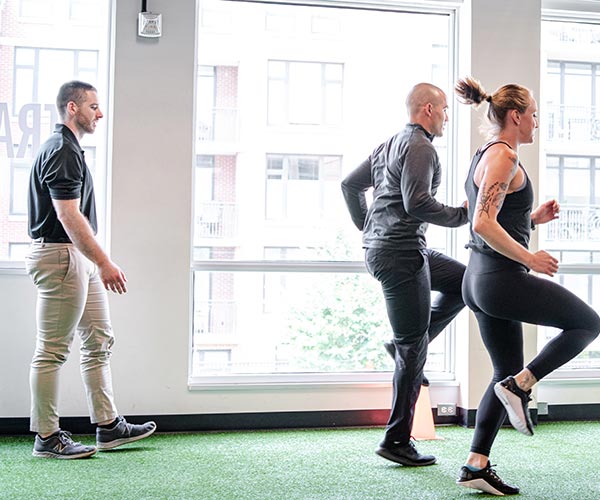
Get The Most Out of Your Runs!

Whether you’re an elite runner or weekend warrior, rest days are equally important. In our years as a physical therapy clinic in Bethesda, we’ve taught our patients that the rest days are a crucial component of any good running program.

Resting is necessary to recover appropriately, avoid burnout, and develop as a runner. On days off, your body repairs and rebuilds broken-down muscle tissue from strenuous runs and training sessions. Without proper rest, you may end up needing a physical therapist in Chevy Chase or Bethesda.

Here are three simple things you can do to optimize your days off.

Catch Up On Sleep

Sleep is one of the most important aspects of recovery. During sleep, your muscles relax, and hormones that promote tissue recovery are produced. 

Without sufficient sleep, your muscles might remain tense and sore, which can even lead to chronic pain. On your days off, try getting to bed an hour earlier to catch up on this vital muscle recovery component.

Perform Light Movement

One of the most important things you can do on a rest day is perform a relaxing home exercise routine to address any inflammation or muscle tightness. Examples include light mobility work, yoga, or whatever else you may enjoy. This will help reduce muscle soreness and improve your range of motion. They’ll help your legs feel fresh and get you ready to run hard the following day.

Fuel Your Body

Another important aspect of rest and recovery is nutrition and hydration. Just because you aren’t running on a rest day doesn’t mean you should deviate from your normal nutrition strategy.

On rest days, it’s essential to fuel your body with foods that support muscle recovery and growth. This means prioritizing protein-rich foods, complex carbs, healthy fats, and plenty of fruits and vegetables. Focus on healthy, nutrient-dense foods to help improve muscle recovery. 

Final Thoughts

Just as your training runs are vital to your running performance, so are your rest days. Without taking the proper time to rest and recover, you’re putting your body at greater risk for injury or burnout. These three simple techniques can help optimize your rest day and improve your recovery. If you want a customized approach to optimizing your rest days, our sports physical therapy clinic in Chevy Chase can help!
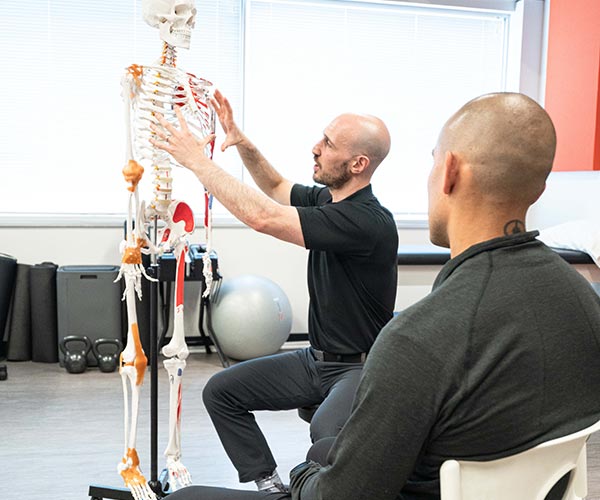

Why Individualized Health & Fitness Programs Are Crucial to Injury Rehabilitation

Health and fitness have never been more prevalent than they are today. From the popularization of “superfoods” like kale and avocado to the birth of new exercise routines like CrossFit and HIIT — the desire to stay healthy and fit is at an all-time high. As a physical therapy clinic in Bethesda and Chevy Chase, this is a positive change that we’re happy to see.

Now more than ever before, people are eating healthier, exercising more, and living a more balanced, holistic lifestyle. While this is a welcomed change, there’s one significant aspect of someone’s overall health that’s often neglected — the individualization of diet and exercise.

Although there are many standard practices for eating healthy and exercising correctly, each person on this planet is unique and has different health needs. For example, someone could eat what most people consider “healthy foods” — such as spinach or broccoli — but it may not be healthy for that individual or their physiological needs.

There is no straightforward, one-size-fits-all approach to health and fitness. Even a seemingly “healthy” program for nutrition or exercise may not be suitable for everyone.

Take someone who exercises regularly and eats a clean, well-balanced diet. While they may be in shape, their diet or exercise might not be a great fit for the individual’s biology, history, medical needs, or genetic makeup. If they were to switch to a program specifically designed to their needs, they would experience a significant improvement in their overall wellness.

This is not to say that eating healthy and exercising more is bad. Instead, to maximize the health benefits, an exercise program should be customized to the individual. This is why injury rehabilitation programs in Bethesda and Chevy Chase are designed specifically for the patient or client. To improve health or recover from an injury effectively, a program must be customized to a patient’s unique fitness level, physiology, and body requirements. 

Can Hiking Make You A Better Runner?

If you’re running is starting to feel stale or boring, it might be time to switch things up. Officially known as “cross-training” in sports physical therapy, hiking can be an effective training strategy to help prepare for running. From both a physical and mental standpoint, there are several benefits that hiking will have on your running performance.

  1. Aerobic gains with less chance of injury

Hiking is the perfect low-impact cardio alternative to running that vastly decreases the impact on the joints and muscles. Doing this low-intensity activity over long periods can help improve your aerobic engine, which helps new runners.

  1. Engage different muscle groups

In our experience with performance physical therapy in Bethesda and Chevy Chase, we’ve noticed that runners can sometimes rely heavily on certain muscle groups while ignoring other important ones. The uneven terrain of hiking requires lunging and squatting movements, which help activate different muscle groups. Adding hiking to your training can help to utilize less-utilized muscles.

  1. Improves balance and leg strength

Hiking, specifically on uphill climbs, requires you to use your glutes and quads to get over hills. This motion is similar to the act of running and gives the body a chance to exert itself without the added stress of actually running. Maintaining a steady pace while hiking also engages the core and stabilization muscles, improving balance and running form.

  1. Stress relief

Let’s be honest — most runners choose time-saving routes in the neighborhood or treadmill rather than getting out on a trail. Though this is great in a pinch, being in nature can help alleviate stress and anxiety, improve productivity, and increase creativity. By cross-training with a hike, you’ll not only improve your performance but your mental health as well.

CHP Spotlight Interview Series: Dr. Anjali Dsouza

Check out this edition of the CHP Spotlight Interview Series with Dr. Anjali Dsouza. Dr. Dsouza is a physician at the District Center for Integrative Medicine. She specializes in integrative medicine, functional medicine, and is an expert in palliative care, as well as psychiatry! She shared so much incredible information that I know will help us during the injury rehabilitation process!

Single-Leg Strength Training Exercises That Reduce Your Risk of Injury

Years of performance physical therapy have revealed that running injuries are often caused by repetitive stress injuries when running. The better you can control the adverse effects of repetitive stress, the fewer injuries you’ll get as a result.

One simple way to control repetitive stress is by implementing single-leg strength training exercises into your training. The benefits of these exercises are numerous. Not only will single-leg exercises increase a runner’s ability to shock absorb in a single leg position, but they’ll also decrease ground contact times, resulting in faster pacing. Lastly, because of your improved capacity to handle stress, your risk of injury is diminished.

Here are some great single-leg exercises to start incorporating into your strength training routine:

  1. Single-Leg Snapback

Single-leg snapbacks help runners improve footstrike mechanics and better understand the impact of different body positions.

Single Leg Snapback

  1. Single-Leg RDL’s

The single-leg RDL is a perfect exercise to train the glutes and hamstrings effectively. This exercise also helps eliminate strength imbalances between the left and right sides of the body, increasing lower-body stability and protecting the knee from injury.

Single Leg RDLs

  1. Single-Leg Bounding Drills

Bounding drills are great for improving force absorption qualities when running or jogging. These drills will help enforce proper trunk, hip, leg positioning, and control needed to land stably on every stride. There are a couple of great bounding drills, but our favorites are Single Leg Forward Bound + Stick⁠, Single-Leg Forward Triple Bound + Stick, and the SL Lateral Bound + Stick⁠.

Single Leg Bounding

Are You Ready to Start Running Again? This Self Assessment will Help!

Are You Ready to Start Running Again? This Self Assessment Will Help 

If ankle injuries occur, it’s important to give your body time to recover. That said, how do you know when you’re ready to run again? This short self-assessment is used in sports physical therapy in Bethesda and Chevy Chase to gauge when patients are ready to return to running after an injury.

  1. Do you have enough dorsiflexion?

Dorsiflexion is the action of moving the foot upwards towards the shin. The degree of dorsiflexion in the foot/ankle plays a major role in avoiding injury, increasing speed, and improving efficiency.

We recommend dorsiflexion of 15 degrees or more before a return to running.

  1. The single-leg hop test

Can you perform a single-leg hop (at least a couple feet) with a soft, steady landing that’s similar between both feet? Athletic physical therapists frequently use the single-leg hop test to determine the patient’s ability to return to high-level athletics after an injury.

https://www.youtube.com/watch?v=ZxvJ7iRawh0

In addition to comparing your results to the accept recovery rates, it’s important to measure how your ankle feels when performing a single-leg hop test. Ideally, the pain level during the test should be 0/10.

  1. Is cardiovascular health good enough?

After several weeks or months of inactivity, there’s a good chance the patient’s cardiovascular health has declined. To return to running safely, it’s important to increase running time and distance gradually. This ensures the body has enough time to adapt to the added stress of running again.

Injuries are bound to happen at some point. The key is to give your body enough time to recover by making sure you don’t return too soon. By following this simple self-assessment, you’ll help ensure you don’t re-injure yourself by returning before your body is ready.

×